
Pairing Balls with Limited Paths
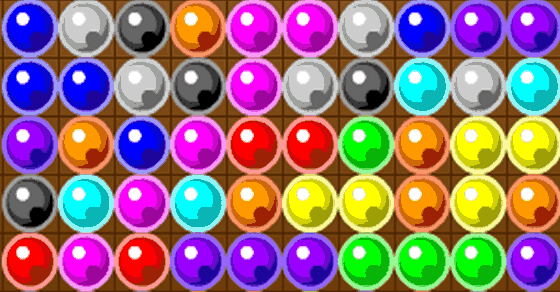
Twins Matching Puzzle asks you to clear a board of colorful balls by selecting two of the same color that can be linked. The catch is the connection rule: the path between them must consist of no more than three straight line segments, and it cannot cross any other ball. Right-angle turns are allowed, so you often need to trace around obstacles rather than through them. This constraint turns a simple matching task into a spatial reasoning exercise. Each successful pair disappears, gradually opening new routes across the board.
Playing Without Pressure
There are no timers, scores, or move limits. You click one ball, then another, and the game instantly checks whether a valid path exists. If it does, the pair vanishes; if not, nothing happens. This immediate feedback helps you internalize the three-line rule without penalty. Because the board never rushes you, you can scan the entire layout, test connections mentally, and plan several moves ahead. The game ends when no valid matches remain, so careful sequencing matters more than speed.
Visual Clarity and Gradual Challenge
Colorful balls against a clean background make it easy to distinguish potential pairs at a glance. As you progress, board layouts may become more tangled, with balls arranged to hide obvious connections and force longer, more winding paths. The difficulty curve is gentle, relying on increased visual complexity rather than new rules. This keeps the experience approachable for newcomers while still offering a satisfying mental workout for puzzle veterans.
Who It Suits
Twins Matching Puzzle is designed for players who enjoy quiet, methodical thinking. The absence of time pressure makes it a good fit for short breaks or winding down. Its family-friendly presentation and intuitive controls mean anyone can start without a tutorial. If you like games that reward observation and forward planning over reflexes, this one delivers that consistently.




Comments
0 comments