
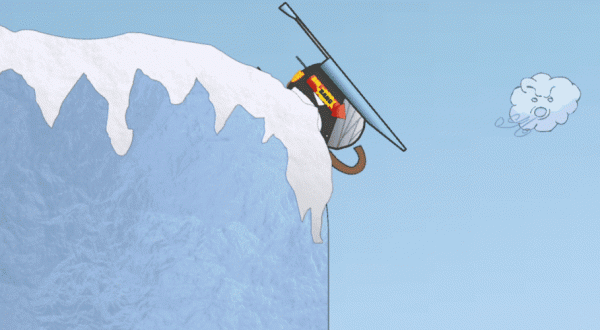
Flight Mechanics and Launching
Every attempt begins at the ramp. You launch a test dummy, then adjust its angle and speed mid-air using arrow keys or on-screen controls. The penguin's unexpected landing led to this test-dummy approach, and each flight produces data you can use to refine the next launch. Physics governs how far and how hard the dummy travels, so small changes in angle or speed have noticeable effects on the outcome. [IMG_1]
Coins, Upgrades, and the Shop
Coins appear during flight and serve as the game's currency. Collecting them lets you visit the shop for better gliders, rockets, and other equipment. Upgrades stack, meaning each purchase adds to your flight distance or impact force. Because equipment combinations vary, experimenting with different glider and rocket setups is part of the strategy. Prioritizing upgrades that directly increase distance and impact tends to yield the most progress toward the iceberg. [IMG_2]
Iceberg Destruction and Progression
The central objective is to hit a large iceberg with enough force to break it apart. Each successful hit reduces the iceberg's health, but total destruction requires continued upgrades. Early flights may only chip away at it; later attempts with stronger equipment can deal more damage. This creates a loop where coin collection funds upgrades, and upgrades enable harder hits. The iceberg's health bar gives clear feedback on whether your current setup is sufficient or needs adjustment. [IMG_3]
Strategy and Persistence
Timing your launch and angle adjustments matters as much as the equipment you buy. Since upgrades stack, there is no single perfect combination; instead, you learn from each flight and adjust. The game rewards persistence because every attempt provides information about what works. Players who enjoy tinkering with physics and watching incremental progress will find the loop satisfying. The colorful graphics and upbeat music keep the tone light even when a flight falls short.







Comments
0 comments