
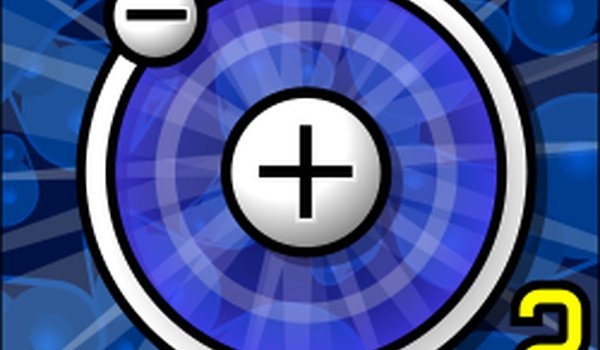
Proton Navigation and Bond Mechanics
In Molecular Puzzle: Chemistry Adventure, you control a proton moving through a nanoscale environment. The core loop involves forming and breaking molecular bonds to open paths and progress. Lasers serve as your primary tool for interacting with atoms, letting you create compounds such as hydrogen, oxygen, and water. Each level presents a new arrangement that tests your grasp of basic chemistry principles. The challenge comes from reading the molecular layout and deciding which bonds to create or sever.Real Science, Accessible Design
The game is based on actual chemistry research from the CaSTL center at UC Irvine, where scientists manipulate single molecules. That foundation shapes how bonds behave and how atoms respond to your laser. Controls are intentionally simple — mouse or arrow keys — so players of any age can begin without a tutorial. Obstacles like scanning tunneling microscopes require careful timing, adding a light action element to the puzzle structure. The 2D presentation keeps the focus on molecular interactions rather than visual complexity.Expanded Content and New Mechanics
This major update triples the original level count and introduces new water-making mechanics. The expanded content means more opportunities to practice bond formation and experiment with different approaches. Each level introduces a distinct challenge, gradually building on concepts like atomic interaction and compound creation. The educational intent is clear throughout: puzzles are designed to reinforce how molecules work, not just to provide abstract brain-teasers. Teachers and students can use the game as a supplemental tool for chemistry topics.Who This Is For
Molecular Puzzle: Chemistry Adventure targets students, teachers, and anyone curious about molecular science. The mouse-only and two-player tags suggest it works well in classroom settings or shared-screen scenarios. Because the controls are minimal and the chemistry concepts are introductory, the game avoids overwhelming players with jargon. Instead, it lets you learn by doing — forming water, breaking bonds, and navigating around instruments you might find in a real lab.Editorial Notes
Compatibility
Play on Any Device | Chrome / Safari / Edge Recommended
Comments
0 comments