
How Loops Become Shapes
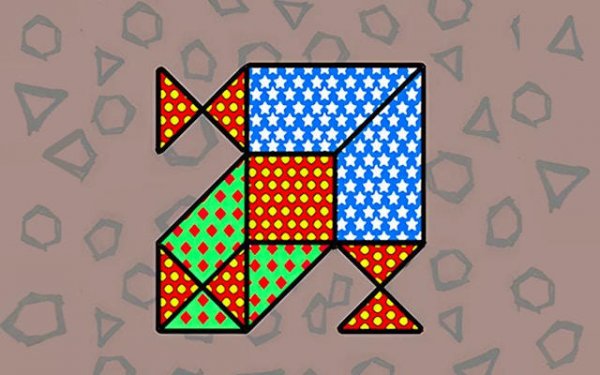
Every move in Connect the Dots: Pattern Puzzle starts with a single action: click or tap adjacent points on a grid, then drag to close a loop. What makes the system tick is the direct relationship between loop size and visual output. A loop built from three or six points produces a green diamond pattern. Four or eight points yield a red polka-dot shape. Five or seven points create a blue star pattern. Because the reward is immediate and predictable, players quickly learn to count points before committing to a drag.
Targets, Moves, and Pressure
Stages hand players a set of target shapes that must be created within a limited number of moves. That constraint is the real puzzle. You cannot simply draw whatever loop feels right; you have to work backward from the required patterns and decide which loops to build first. Early stages keep targets simple so the loop-to-pattern rule sinks in. Later stages stack multiple targets and tighten the move budget, which pushes players toward efficient routes rather than trial and error.
Reading the Board Before You Drag
Careful players study the grid and the target list before making a single connection. Combining loops efficiently often means sharing edges or planning a sequence where one loop's endpoint becomes another loop's starting point. Experimentation still matters, though. Trying an unusual loop size can reveal a pattern you did not expect, and that knowledge carries into the next stage. If a level stalls, stepping away briefly tends to reset your eye for the grid.
Look and Feel
The game uses a bright 2D style with distinct colors for each pattern type, so the grid stays readable even as it fills with shapes. Controls respond to both touch and mouse input, and the interface avoids clutter. That clarity matters in a logic puzzle where a missed connection can cost a move. The overall tone is relaxed rather than tense, which suits short sessions and makes the game approachable for players who prefer thinking over reflexes.



Comments
0 comments