

What You Actually Do
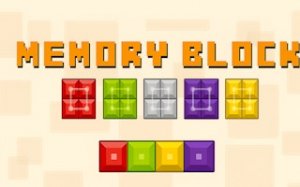
Each round presents a sequence of colored blocks that light up in a specific order. Your task is to reproduce that order by tapping the blocks—either as they appear, emphasizing speed and accuracy, or after the full sequence finishes, relying on exact recall. The core loop is simple: watch, remember, repeat. As you succeed, the sequences grow longer and the board itself can expand, forcing you to track more positions and colors simultaneously. That expanding grid is the game's main difficulty lever; it changes how much visual information you must hold in mind at once, not just how many steps you memorize.
Modes and Progression
The game includes multiple modes that vary the challenge. Some may focus on real-time tapping, others on pure recall after the sequence ends. Progressive difficulty spans many levels, with patterns becoming more complex as you advance. Because the board expands, later stages demand sharper attention and stronger short-term memory. The design encourages repeated play to beat personal bests and track improvement over time, making it easy to measure progress without any external pressure.
Who It Suits and How to Improve
Accessible to beginners yet satisfying for experienced players, Color Sequence Memory Puzzle works well for quick brain breaks or longer sessions. To get better, practice regularly and focus on the sequence without distractions. Chunking—grouping the pattern into smaller sets—can make longer sequences easier to remember. Start with easier levels to build a foundation, then gradually take on harder challenges. Short breaks between sessions help maintain concentration, and daily play, even for a few minutes, can lead to noticeable cognitive benefits.






Comments
0 comments