
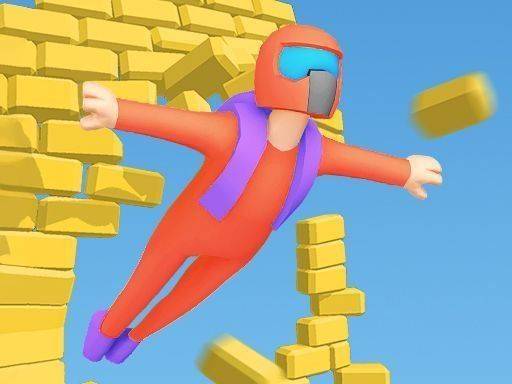
The Single-Mechanic Focus
Hop Haven strips platforming down to one action: jumping. Players control a character that can leap across gaps and onto elevated surfaces. There are no enemies to defeat, no items to collect, and no combat systems. Every obstacle is navigated by reading the environment and timing a jump correctly. The height and distance of each jump depend on how long the input is held, turning a simple tap into a test of rhythm and observation.
Stage Design and Difficulty Curve
Levels are arranged in a sequence that introduces basic gaps and low walls before adding moving platforms and tighter spaces. Early stages let players learn the relationship between hold duration and jump arc. Later stages demand more careful planning, as moving platforms require timing not just the jump but also the wait. Completing a level unlocks the next, so progress is always visible and the difficulty rises gradually.
Presentation and Atmosphere
The visual style uses bright, cheerful colors and simple character designs. Backgrounds shift between themes such as sunny meadows and starry nights, giving each set of stages a distinct mood without distracting from the platforms. The soundtrack consists of upbeat, non-intrusive melodies, and jump and landing sound effects provide immediate audio feedback. Together, these elements create a relaxed, stress-free tone that suits the game's family-friendly tag.
Controls and Accessibility
Hop Haven uses a one-button control scheme: a single tap or click makes the character jump. Holding the input longer produces a higher, longer jump. There are no cluttered menus or complex settings, and new players can start playing immediately without reading lengthy instructions. The minimal interface keeps attention on the action, making the game easy to understand but difficult to master, especially in later stages where precision matters most.





Comments
0 comments