
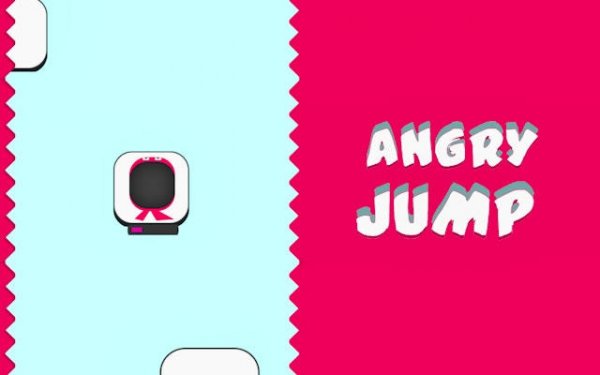
The One-Tap Jump Loop
Leap Dash Platformer reduces platforming to a single input: tap to jump. Your runner moves forward on its own, so the only decision is when to tap. Platforms vary in width and the gaps between them change, which means you cannot settle into a fixed rhythm. Early platforms are wide with short gaps, giving you room to calibrate. Later, platforms narrow and gaps stretch, so the same tap that worked seconds ago now fails.
How Difficulty Escalates
Speed climbs as the run continues, and the spacing between platforms becomes less predictable. You stop reacting to what you see and start anticipating what is coming. There are no checkpoints and no saves. One mistimed jump ends the attempt and sends you back to the start. That structure rewards consistency over luck, and improvement shows up as longer runs rather than higher individual jumps.
Minimal Visuals, Clear Feedback
Bright platforms sit against a dark background, which makes edges and distances easy to read at speed. Animations respond immediately to input, so you always know whether a jump registered. Audio stays understated: a soft tone confirms a landing, and a different cue marks a fall. Neither element competes for attention, which matters when a fraction of a second decides the outcome.
Scoring and the Leaderboard
Every platform you land on adds to your score, and the score resets with each run. A global leaderboard shows where your best attempt ranks against other players, updating in real time. That comparison gives the game a competitive edge beyond personal improvement, and it is the main reason to keep retrying after a short run ends.
Short Runs, Varied Layouts
Runs typically last a few minutes before a mistake ends them. Platform layouts are procedurally generated, so no two attempts play out the same way. The combination of brief sessions and shifting layouts suits quick breaks as well as longer practice, and it keeps repetition from turning into monotony.








Comments
0 comments