
The Inverted Tag Mechanic
Pennant Pass Showdown takes the familiar game of tag and reverses its goal. Rather than trying to keep possession of an item, players must force the pennant onto their opponent. Each round lasts two minutes, and the player holding the pennant when the timer hits zero loses. That single reversal changes every decision: chasing becomes a risk, and retreating becomes a trap. The result is a constant push-and-pull where positioning matters more than speed alone.
Keyboard Controls and Local Setup
Two players share one keyboard, with no menus or button combinations to learn. One player moves with WASD, the other with the arrow keys. This split-input design keeps the focus on competition rather than control mastery, so players of any age or gaming background can start immediately. The absence of a tutorial is intentional: the rules are simple enough to grasp in seconds, and the challenge comes from reading your opponent, not the controller.
Pixel Art and Readable Action
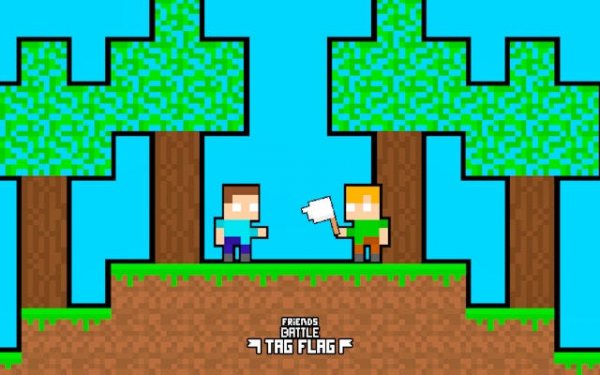
The pixel art style recalls early arcade titles, with clear sprites and a simple color palette that make tracking the pennant and both players easy. Clean animations and uncluttered environments prevent visual noise from interfering with quick decisions. This retro aesthetic supports the fast pace without overwhelming the screen, which is especially important when both players are moving unpredictably in a small arena.
Round Pacing and Strategic Depth
Two-minute rounds create a natural rhythm: short enough for quick breaks, long enough for momentum to shift. The timer forces constant adaptation. The pennant holder must move unpredictably to avoid being tagged, while the opponent must anticipate paths and cut off escape routes. Over multiple rounds, players learn each other's tendencies and develop counter-strategies, producing a satisfying loop of adaptation and improvement. [IMG_1]
Social and Family Appeal
Designed for face-to-face competition on a single device, Pennant Pass Showdown contains no mature themes or violent content. Short rounds and simple rules encourage repeated play, and the local multiplayer format fosters direct interaction and friendly rivalry. It suits parties, family gatherings, and mixed-age groups looking for a quick, competitive arcade experience.








Comments
0 comments